
Which trees need to come down?
Most of the calls we get on Cobb Mountain and around Clear Lake are about a few kinds of trees:
- Dead and dying pines. After the 2015 Valley Fire and the dry years that followed, bark beetles moved into pines that were already stressed by drought and fire. A beetle killed pine turns brown from the top, dries out and gets brittle. It will drop limbs before the trunk goes.
- Big firs and oaks over the house. A tree that was fine thirty years ago can now be leaning over the roof, the deck or the drive. If the trunk has a crack, a hollow, or a lean that is getting worse, it is worth a look.
- Trees already damaged. A split top, a limb hung up in the canopy, a tree half over after a storm. If it is on the house right now, go to storm and emergency work.
- Trees in the way. A new driveway, a shop or a garden, or a yard that sits in shade all year.
- Trees that make a fire hazard. Dead trees and ladder fuels close to the house. That work often goes together with defensible space clearing.
Not every tree that worries you has to come down. Sometimes a good trim takes the risk away and the tree stays. Robert will tell you straight which one you need.
How do you take down a big tree right next to a house?
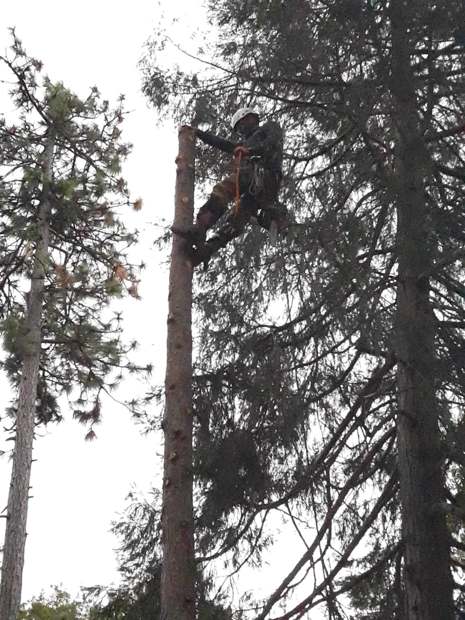
Most removals up here are not open ground felling. The tree is next to a cabin, over a deck, between two buildings or on a steep lot. That is where the equipment and the care matter.
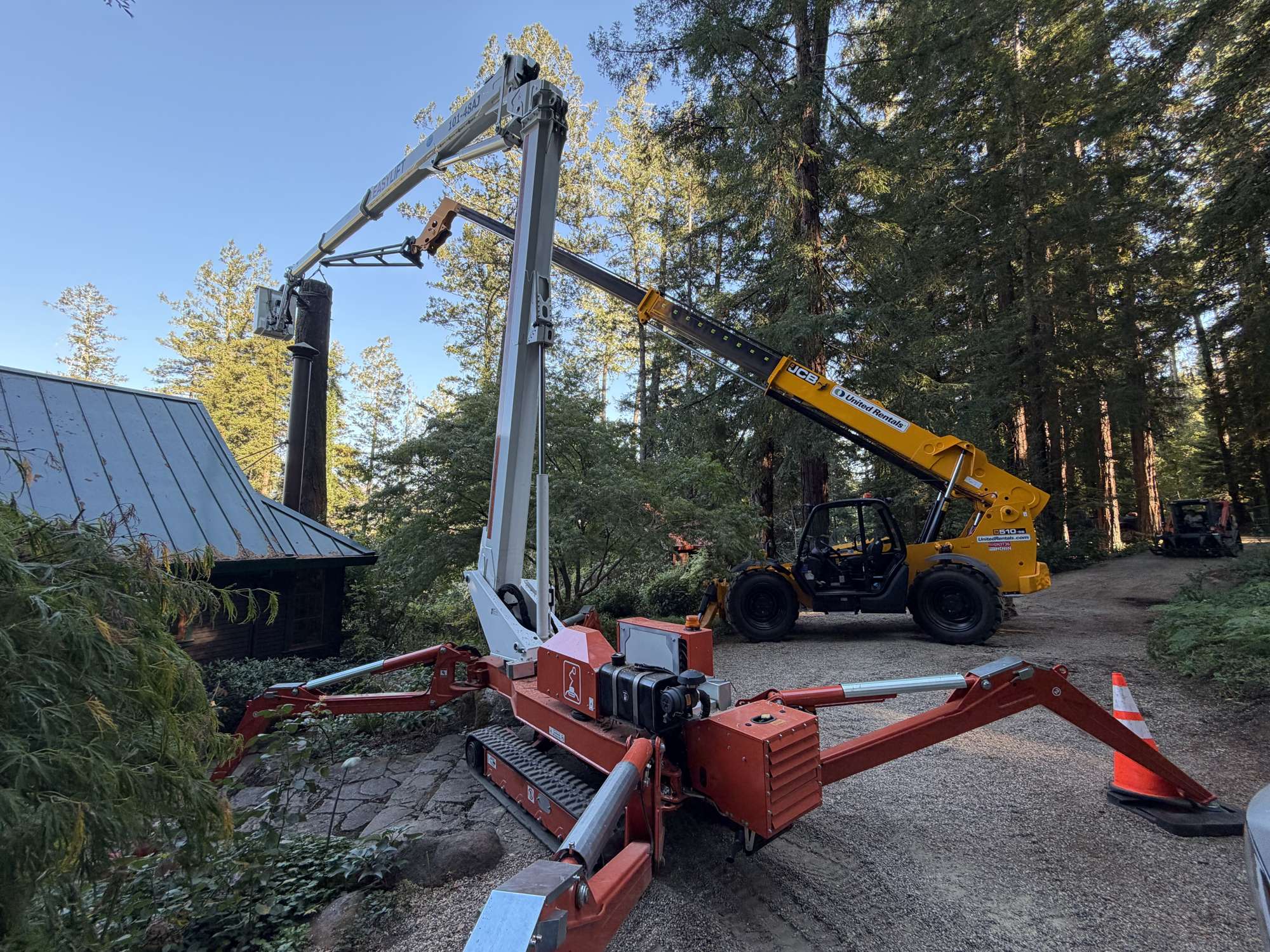
R2 runs a tracked spider lift. It walks through tight spaces on its own tracks and sets up on a lawn or a patio without a big truck, then reaches up into the tree. From the basket the crew takes the tree down from the top in pieces, so each piece is cut and lowered where it was planned to go. On the biggest jobs the lift works with a telehandler to hold and lower heavy sections.
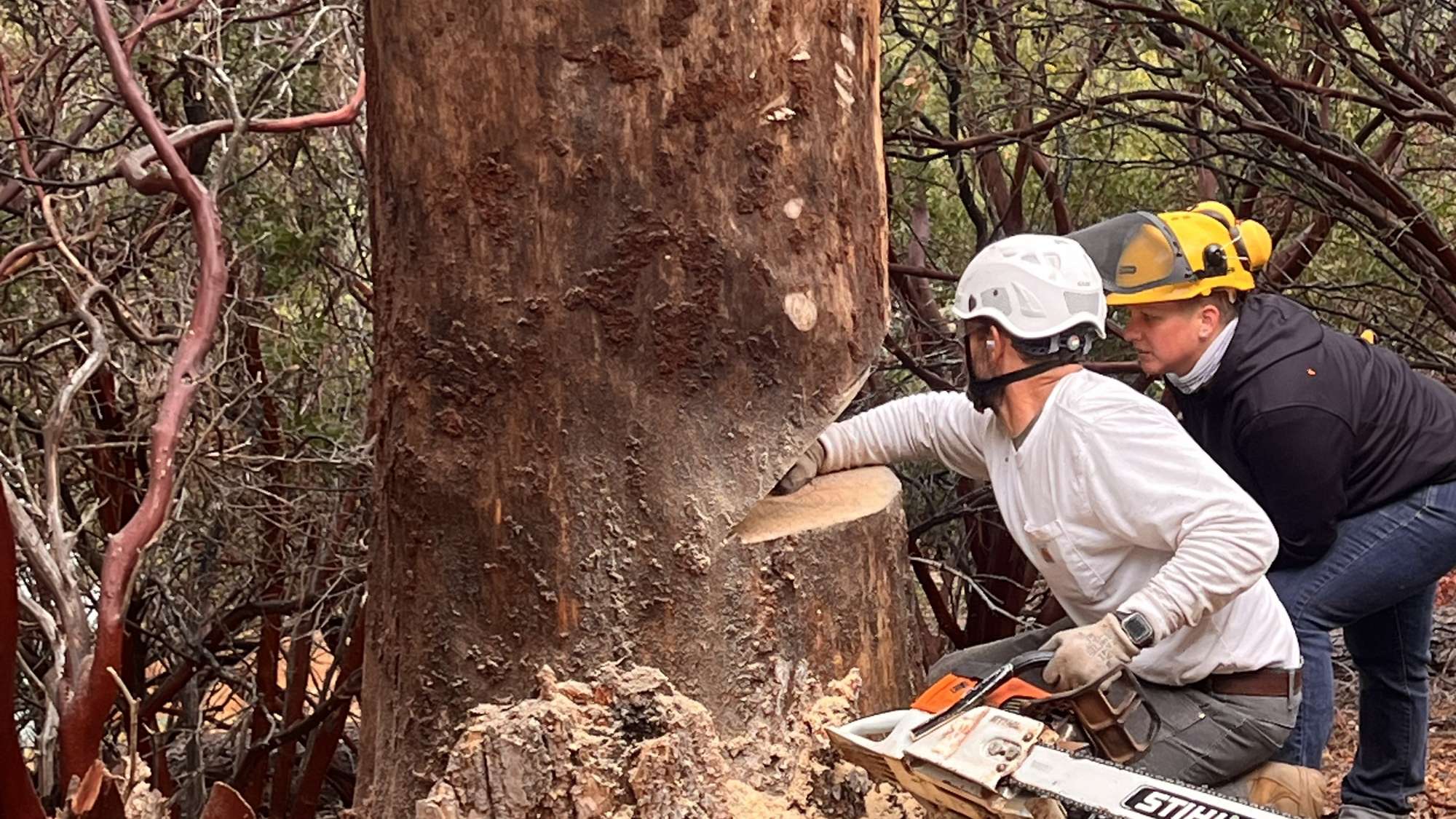
On open ground, a tree can be felled whole. The crew cuts a face notch on the side the tree should fall, then the back cut, and the tree goes where it was aimed. Robert holds a Licensed Timber Operator license through CalFire and works the way he talks about selective logging: “we try to bring a tree down without injuring other trees.”
What happened on the Calistoga job
One of the biggest removals R2 has done was in Calistoga in 2026: four very old and large trees, two close to the house and one growing up through a deck. A tall fir stood right against the cabin. The crew limbed it, then took the trunk down section by section from the lift basket, with the telehandler lowering the pieces clear of the roof. When the trunk was cut, the cross section showed a crack running through the inside of the tree that you could not see from the outside.
The owner wrote afterward: “His team painstakingly removed the tree with no damage to our home or deck. It was amazing. They left the property as they found it, clean and perfect.” (Monika K., October 2026). The deck is still there, with a round opening where the fir used to stand. Read the full Calistoga case study.


What moves the price of a tree removal?
We price every removal after we see it, and you get the number before any work starts. These are the things that make one tree cost more than another:
- Size. Height and trunk width decide how much wood there is to cut, lower and move.
- What is under it. A tree over a roof, a deck or a power line has to come down in small, controlled pieces. A tree in an open field can often be felled.
- Access. Whether the lift can reach it, or the work has to be climbed. Steep, rocky lots take longer.
- Condition. Dead wood breaks in ways live wood does not, so it is slower to work safely.
- What you want done with the wood. Hauled away, cut into firewood rounds and left, chipped, or taken to our mill.
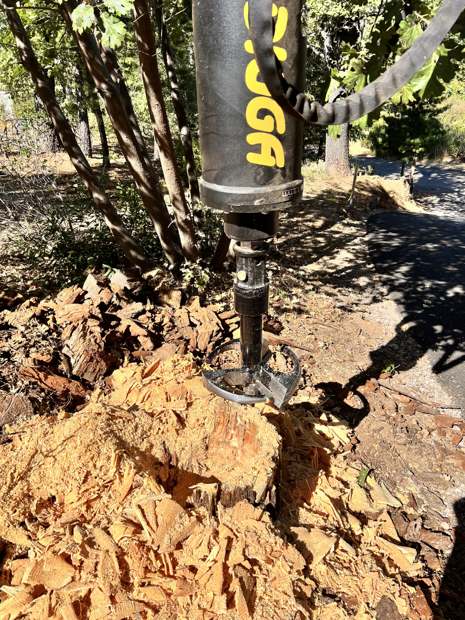
- Stumps. Ground down if you ask for it, or left. Mary C. had “multiple stumps ground up” early in 2025.
- How many trees. Several trees in one visit usually work out better than several trips.
Customers bring up price often in their reviews: “Price was right!” and “The pricing was fair and transparent.”
How a removal goes, start to finish
1. Call or text. Tell us what the tree is and where. A couple of photos help a lot. If Robert is up a tree, he calls you back.
2. We look at it with you. We walk the tree with you, look at the lean, the wood and what is underneath, and talk through the options, including whether it really needs to come down.
3. The crew does the job. Lift, climber or felling, whatever that tree needs. The work area is protected and the pieces go where they were planned.
4. Cleanup. Brush is chipped, the wood goes where you asked, and the yard is raked. Reviewers keep saying the same thing: “They left the property as they found it, clean and perfect.”
Where the wood goes after it comes down
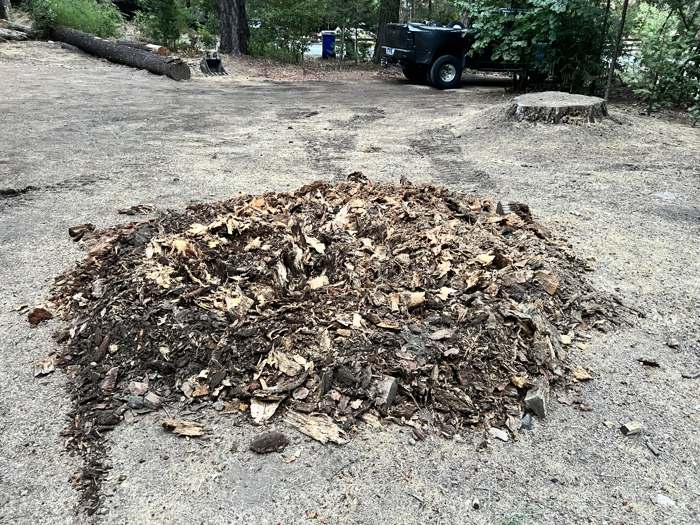
This is the part that makes R2 different. “Nothing goes to waste,” Robert says. “We take it down conscientiously.” If you want the tree back in some form, good logs can go to our own sawmill and come back as lumber, a shed or furniture. If you want firewood, we leave it cut. The brush goes through the chipper, and the scraps from milling become wood mulch and soil that go back onto the land. The tree ends its life feeding the forest it came from. That is what Robert means by full circle.