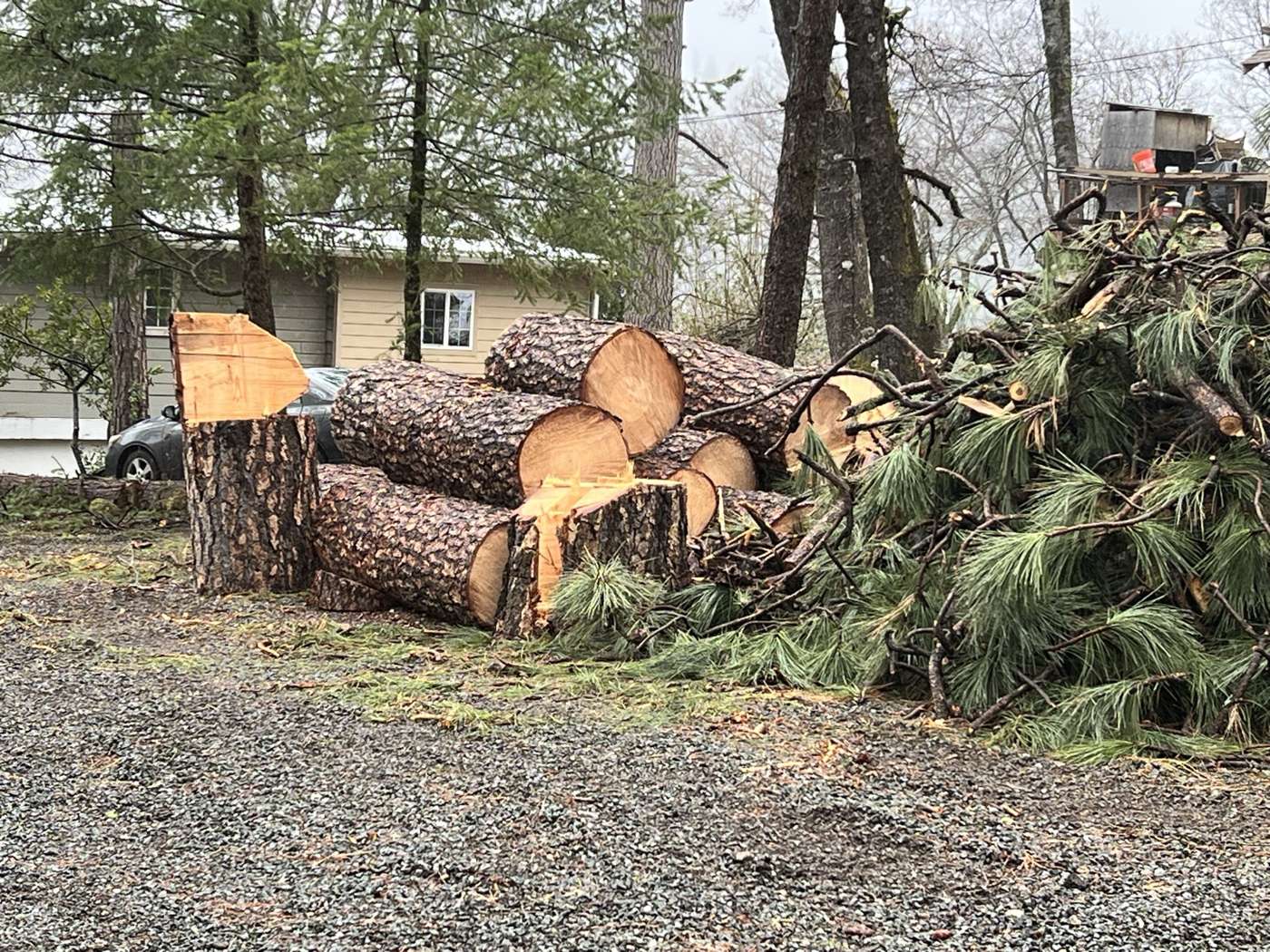
Logs left behind after PG&E tree work
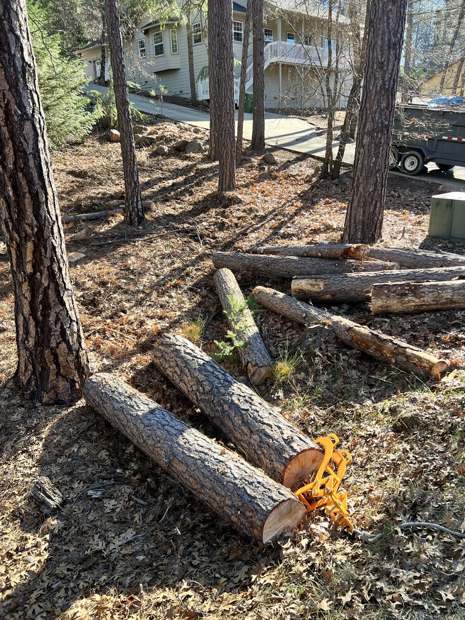
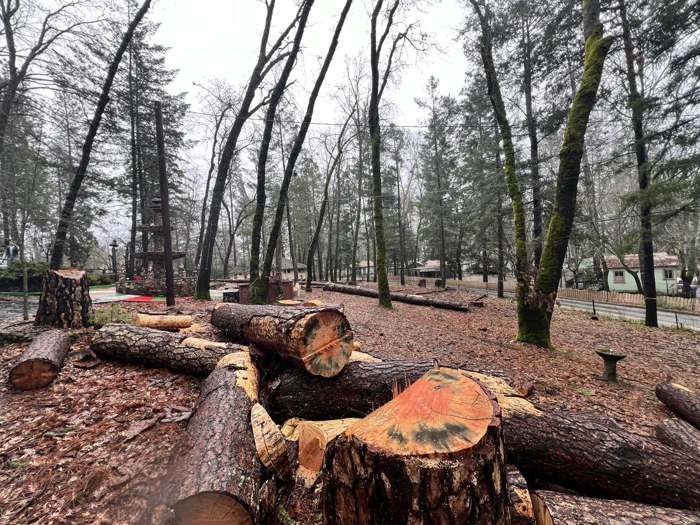
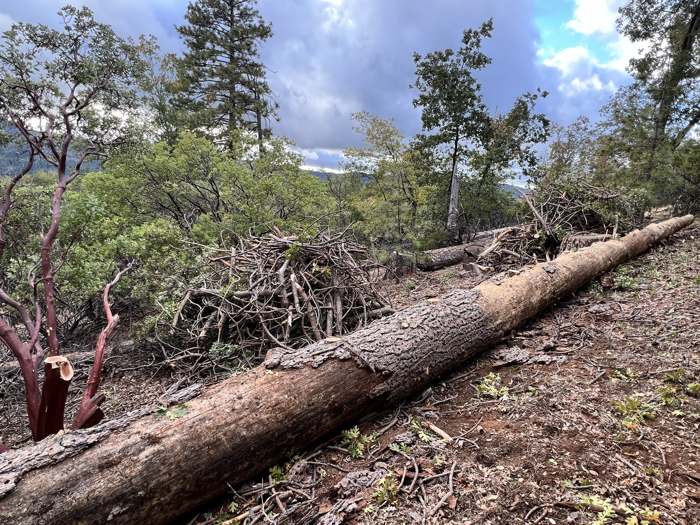
When PG&E crews cut a tree near a power line, the wood is sometimes left on the property. That leaves you with big, heavy rounds of log in the yard that are too much to move by hand.
We get these calls. Betty C. wrote: “Robert removed logs left by PGE tree removal. Logs were removed completely and area left clean.” Tom O. had logs to go from his yard too: “He came while I was at work to remove logs from yard. He went way above on yard clean up and while we were on vacation finished it.”
Before we haul, ask yourself if you want any of it. Big, sound logs can go to our mill and come back as boards, and the rest can be split for your woodstove.
What else we haul and clean up
- Dead trees and fallen trees. Cut up, loaded and hauled, or left as firewood. Colleen A. had “14 dead trees” taken out of her 1/3 acre property, and R2 left her “with plenty of firewood and hauling away surplus material.”
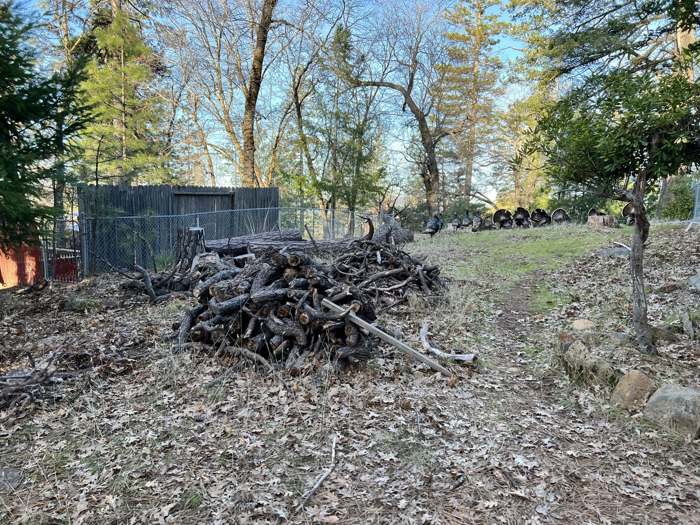
- Piles left from the fires. Old piles of dead trees and burn debris from the Valley Fire years.
- Storm debris. Branches, tops and broken trees after a winter storm. See storm and emergency work.
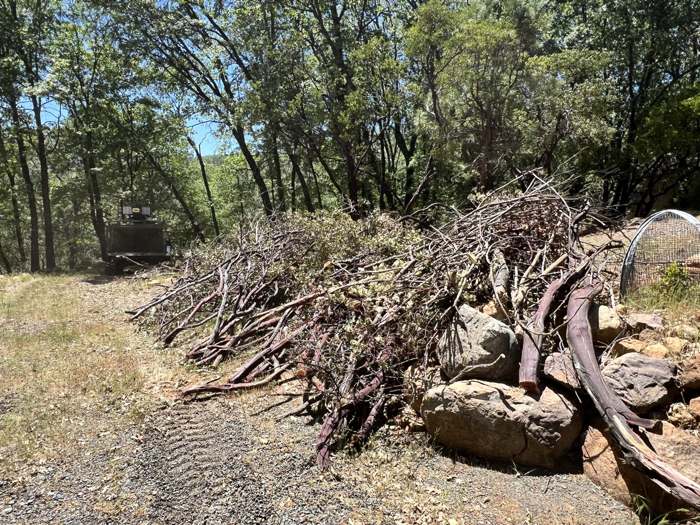
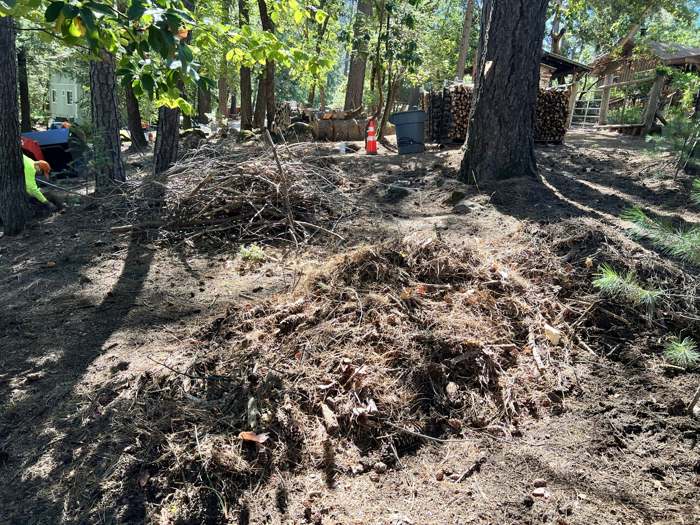
- Brush piles. Brush you cut yourself and never got around to burning, chipped on the spot.
- Debris around buildings. Fallen wood and old debris cleared from around structures and decks.
- General yard cleanup. Anita D. used R2 for “tree removal and trimming as well as yard clean up” and said “they cleaned up so well you would never know they were there.”
How a haul-off job goes
1. Send a photo. Text a picture of the logs or the pile and tell us where it is. That alone often tells us what gear to bring.
2. Agree on the plan. What goes, what stays, and whether you want firewood, chips or nothing left at all. You get the price before we start.
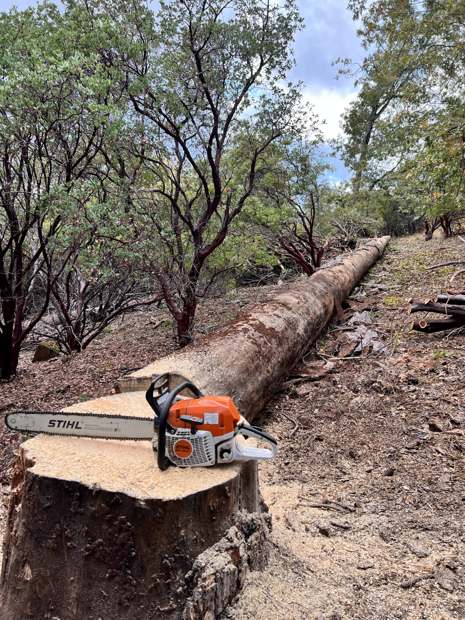
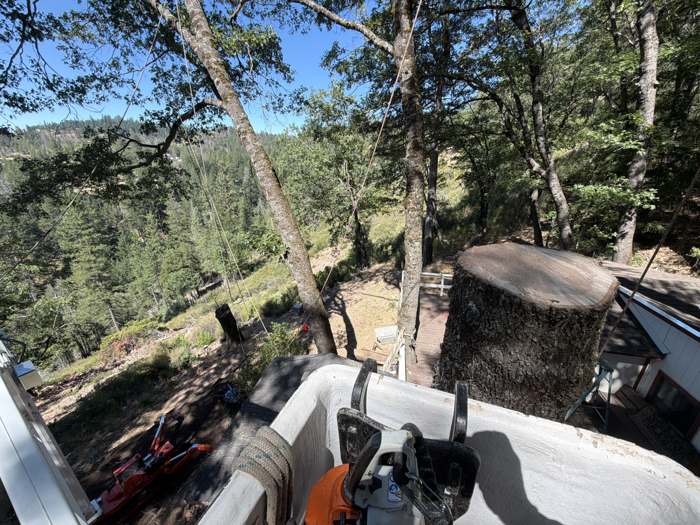
3. Cut, load and chip. The crew bucks the logs into pieces that can be handled, the skid steer or excavator loads the heavy rounds, and the brush goes through the chipper.
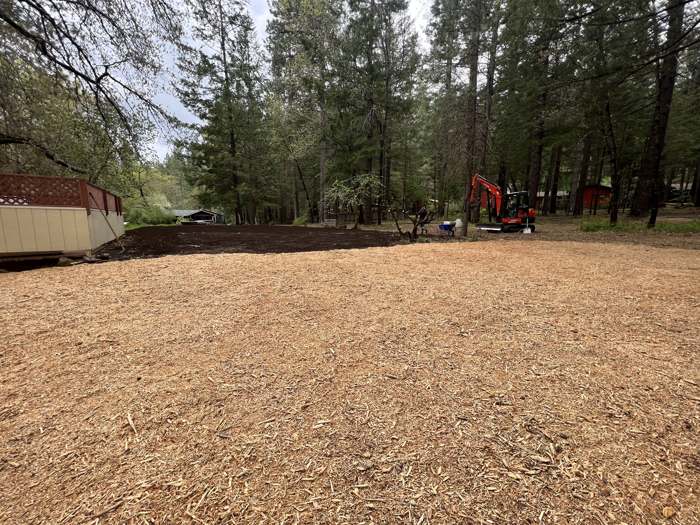
4. Rake and finish. Sawdust, bark and twigs raked up. You may not even need to be home, as Tom O. found.
What moves the price of log and debris removal?
- How much there is. The size of the logs and the size of the pile.
- Access. Whether a machine can drive to it, or everything has to be carried out.
- Type of material. Clean logs and brush chip and haul easily. Charred or mixed debris takes more handling.
- What stays. Leaving firewood or chips on site means less to haul away.
- Distance. Where the job is in Lake County.
Customers who have used R2 many times say the same thing in different words: Raymond W., “they always show up on time and do a great job,” and Carol E., “Price was right!”
Why we do not just burn it
Robert has seen what burning all that wood looks like. In 2022, about seven years after the 2015 Valley Fire, he was asked to assist in operating a CalFire pilot program feeding beetle-kill pine logs into an air curtain incinerator, where, as he tells it, you “put like six logs in here and you just wait for like two hours.” It left him asking why so much good material was going into the air as smoke.
So at R2, logs and debris are sorted, not just dumped. Good logs go to the sawmill. Firewood goes to people who heat with wood. A few years ago R2 ran a wood bank that gave firewood away to the community, funded by a grant from the US Forest Service. Brush and small pieces are chipped and become wood mulch and soil. It is the full circle Robert talks about, and it starts with a pile of logs in your yard.
Clearing before fire season
A pile of dead logs or brush next to the house is fuel. Hauling it off or chipping it is one of the easiest ways to make a property safer before summer, and it fits well with defensible space clearing. If you are getting your place ready for fire season, tell us about the piles too and we can do it all in one visit.
Keeping some firewood
A lot of people in Lake County heat with wood, and the logs in your yard may be next winter’s firewood. If you want to keep some, tell us when we price the job. We can cut it to stove length and stack it where you want it, and haul away the rest. Colleen A. was left “with plenty of firewood” from her dead trees.
Keep in mind that green wood needs time to dry before it burns well, so wood cut this year is usually best for next year. And keep the stack away from the house: firewood within the first few feet of the walls is fuel right where embers land.