
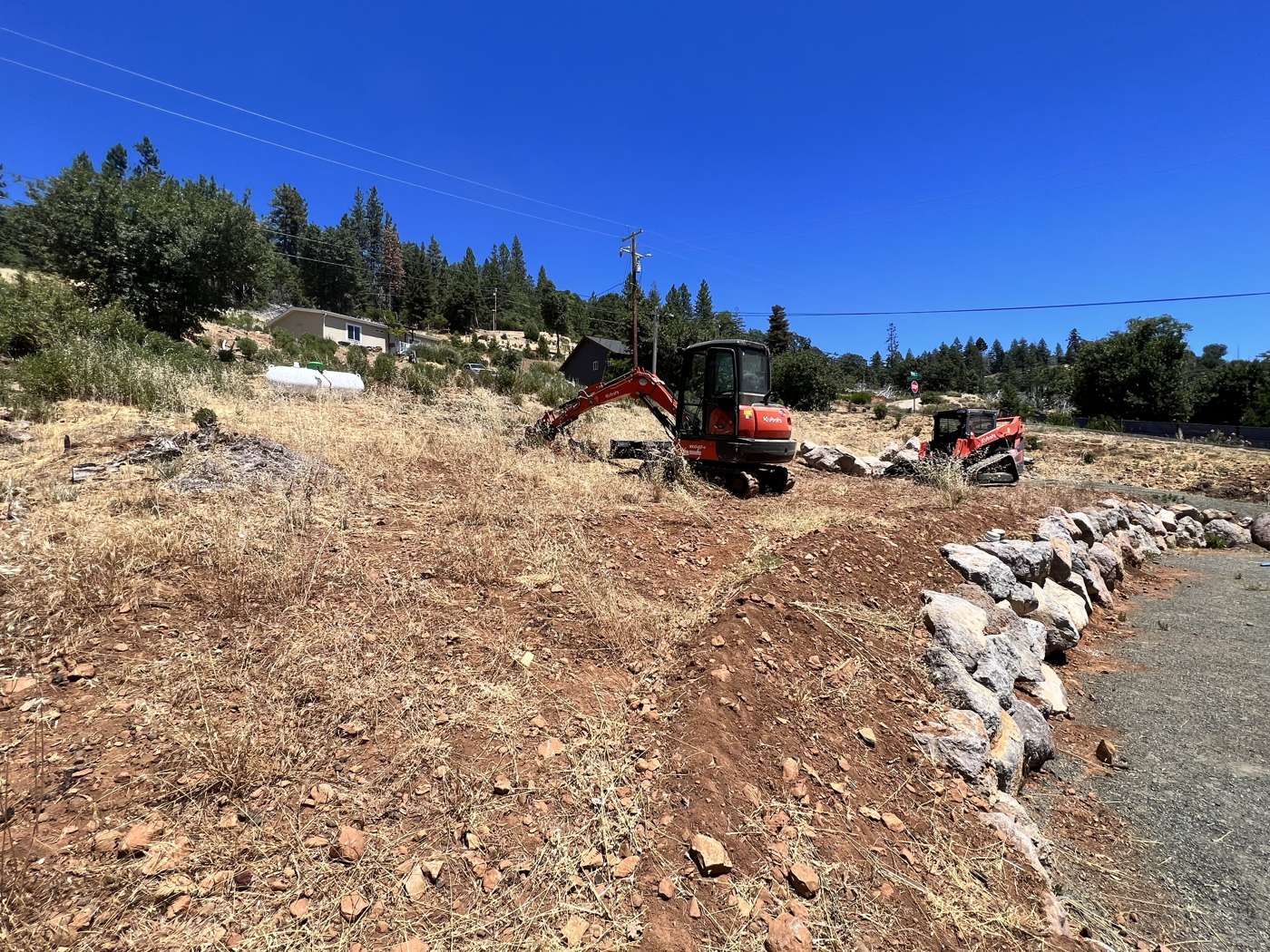
What kind of land clearing do you do?
- Lots left after a fire. Dead trees, burned debris, old foundations and fallen wood.
- Piles of dead trees. George S. had “three huge piles of dead trees left over from the Valley Fire” removed. “Now we have beautiful open areas where there used to be unsightly and dangerous fire hazards.”
- Overgrown lots. Brush and small trees that took over a parcel, cleared so you can build, sell, or just use the land.
- Grading. Leveling and shaping the ground once it is cleared. Roger B. wrote that they did “a great job of hauling away all the logs and branches and grading the lot.”
- Rock work. Rock walls and borders set with the excavator. Jayson C.: “They made a beautiful rock wall added a French drain under my house and put mulch up my walkway.”
- Drainage and roads. Karl B. had R2 install culverts, remove “many downed trees to be chipped and recycled,” and build a road.
- Finishing. Gravel paths and drives spread, mulch put down, the lot left ready to use.
Why one company for trees and dirt work helps
On a lot of jobs, the trees and the ground are one problem. The dead trees have to come out before the excavator can grade, and the excavator is the best tool for pulling stumps and moving big logs. When one crew does both, the job does not stall waiting for the next contractor.
That is how Robert ended up doing it this way. In the years after the Valley Fire the calls kept coming and the county was looking for help with all that material, “so I just stepped up and started doing it and figuring it out.” Today R2 has its own excavator, skid steer, spider lift and tracked chipper, and the crew to run them. Shawna S. had work “we thought would be impossible, but Robert and his team, along with their awesome equipment, handled it all with ease.”
How a land clearing job goes
1. Walk the land. Robert walks the property with you. You show him what you want the land to be, and together you mark what stays: good trees, rock outcrops, anything with meaning to you.
2. Trees and brush first. Dead and unwanted trees come down, brush is cut, and everything is sorted: logs, firewood, brush for the chipper.
3. Machine work. The excavator pulls stumps, moves logs and rock, and grades the ground. Drains, culverts and rock walls go in at this stage.
4. Finish. Gravel, mulch or seed as planned, and a final cleanup. Stanley H. has worked with R2 “numerous times” and likes the “attention to detail.”
A bigger lot can take more than one day. Robert will tell you up front how long he expects it to take, and keep you posted. Michael P. wrote that Robert “maintains active communication throughout the project” and “is willing to adjust the work schedule/plan to meet your needs.”
What moves the price of land clearing?
- Acreage and density. How much ground, and how thick the trees and brush are.
- Dead wood and old debris. Burned trees and piles take more handling than live brush.
- Slope, rock and access. Steep or rocky ground, and how the machines get in.
- Stumps. Pulled, ground or left.
- The finish. Rough cleared, graded, or finished with rock, gravel, drains or mulch.
- Hauling. How much leaves the site, and how much is chipped or used on the property.
We walk it first and give you the price before any work starts.


Permits and the County
Grading, drainage work, road building and clearing near creeks can need county approval. Before a big clearing or grading job, check with the County of Lake, or with the City of Clearlake or the City of Lakeport if your lot is inside city limits. Robert can tell you what he has seen on similar jobs, but the County has the final word.
Where the cleared wood goes
Land clearing produces a lot of wood, and R2 does not want to burn it. In 2022 Robert helped run a CalFire air curtain incinerator burning beetle-kill pine logs, and he has spent the years since finding better uses for that material. Good logs go to our sawmill. Firewood can stay with you. Brush and small wood go through the chipper and come back as wood mulch and soil. “Nothing goes to waste,” Robert says. The land you cleared can even get some of its own trees back as mulch on the new paths and beds.
Who we clear land for
Land clearing customers come to us for all kinds of reasons. Some are owners of lots that burned in the Valley Fire and have sat untouched since. Some are getting ready to build, or to sell, and need the lot opened up so people can see it. Some just want to use land they have owned for years and have not been able to walk across. And some are getting ready for fire season and want the dead wood gone. Robert’s line on it is simple: “we really take on just about any job, big or small, because that’s just what the community needs.”
